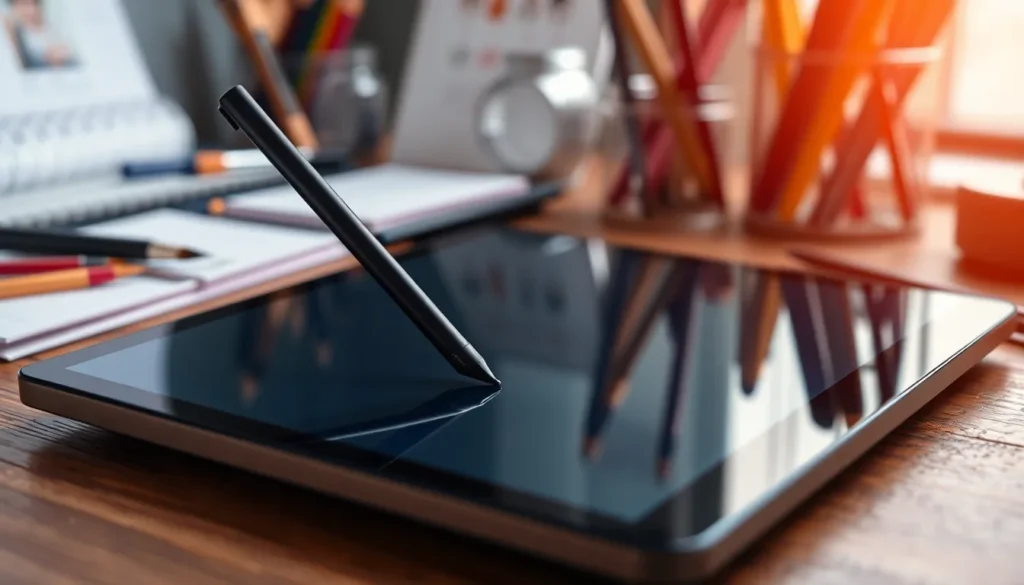
In a world where fingers just don’t cut it anymore, the tablet stylus has emerged as the unsung hero of creativity. Gone are the days of smudged screens and awkward scribbles. With a stylus in hand, anyone can transform their tablet into a canvas, a notebook, or even a digital masterpiece. It’s like upgrading from a flip phone to the latest smartphone—once you try it, you’ll wonder how you ever lived without it.
Overview of Tablet Stylus
Tablet styluses serve as essential tools, designed to improve precision while interacting with tablet screens. These devices are ideal for artists, note-takers, and professionals seeking enhanced productivity. Features vary among styluses, including pressure sensitivity, tilt recognition, and palm rejection technology.
Design impacts usability significantly. Some styluses resemble traditional pens, offering ergonomic grips for comfortable use during extended periods. Others offer multi-functionality, featuring built-in buttons to access shortcuts effectively. Battery life also plays a crucial role, with active styluses requiring regular charging while passive options rely on no batteries.
Compatibility with various tablets is crucial. Not all styluses work universally; many operate specifically with certain brands or models, making it essential for users to check compatibility before purchasing. Brands such as Apple, Samsung, and Microsoft offer styluses designed for their respective devices, optimizing the user experience for their unique ecosystems.
Performance remains a crucial consideration. Many styluses provide low latency, ensuring a seamless and responsive drawing or writing experience. The quality of the nib affects precision, with options ranging from fine tips for detailed work to broader tips for larger strokes.
Price points vary, ranging from budget-friendly to premium styluses with advanced features. Users often evaluate their needs against the cost, choosing options that provide the best balance of functionality and affordability. Reviews and recommendations from reliable sources help guide purchase decisions, ensuring satisfaction with their chosen stylus.
Types of Tablet Stylus
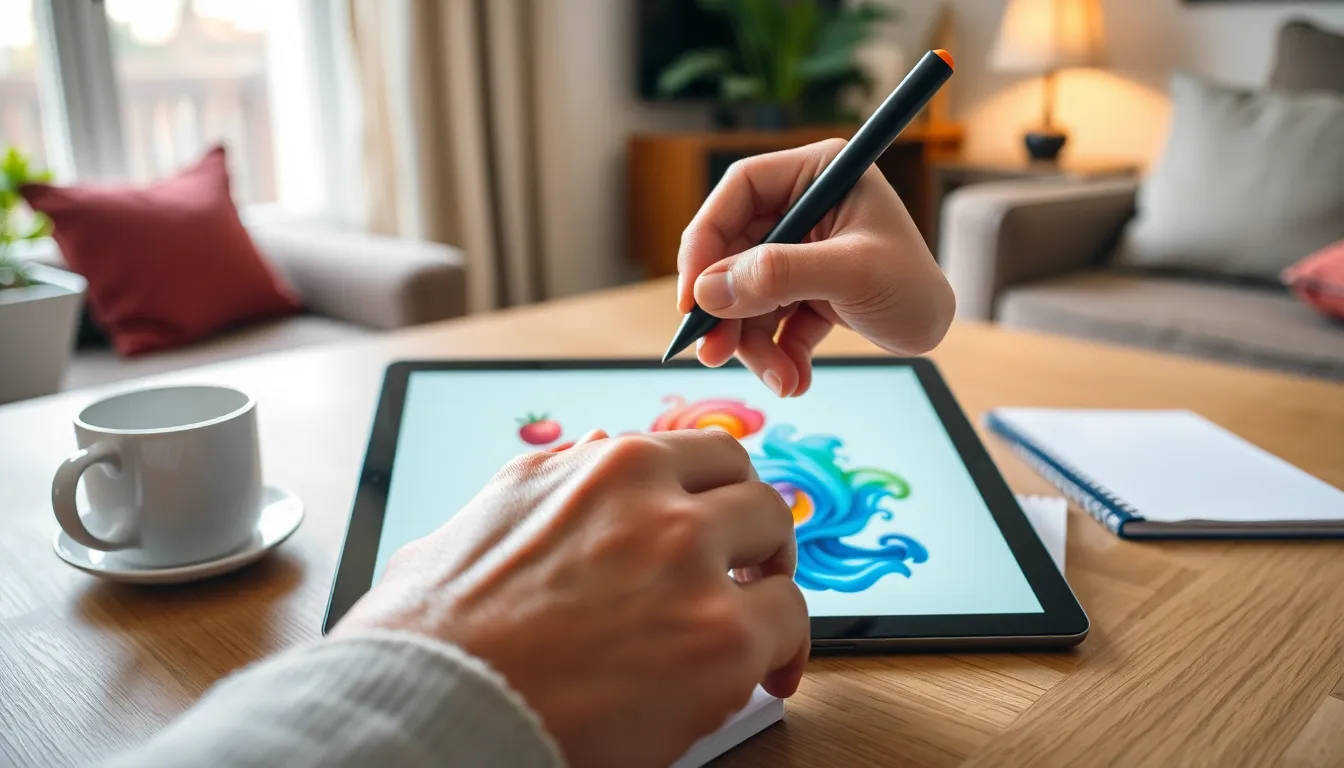
Tablet styluses come in two primary types: active and passive. Understanding the differences between them helps users choose the right option for their needs.
Active Stylus
Active styluses operate with built-in technology that enhances functionality. Pressure sensitivity allows for varying line thickness during drawing. This feature appeals to artists, as they achieve more expressive strokes. Tilt recognition enables users to tilt the stylus for shading effects, creating a natural drawing experience. Many models include palm rejection technology, allowing users to rest their hands on the screen without interference. Common examples include the Apple Pencil and Samsung S Pen. Battery life varies among active styluses, often requiring periodic charging but providing a rich set of features in return.
Passive Stylus
Passive styluses serve as simple pointing devices without advanced features. These tools typically resemble traditional pens and are compatible with any capacitive touch screen. Their simplicity makes them accessible for note-taking, browsing, and basic drawing. While lacking pressure sensitivity or tilt functionality, they excel in affordability and ease of use. Many passive styluses incorporate a rubber or foam tip for smooth interactions. Users who prefer a straightforward approach to tablet navigation often favor passive styluses. Examples include generic stylus pens sold at various retailers.
Key Features to Consider
Choosing the right tablet stylus involves considering several key features that enhance functionality and user experience. Prioritizing these features ensures that users select a stylus that meets their specific needs.
Pressure Sensitivity
Pressure sensitivity plays a vital role in the performance of a stylus. Higher levels of sensitivity enable varied line thickness based on the user’s pressure, making it essential for artists who want expressive and dynamic strokes. Many advanced styluses offer varying degrees of sensitivity, with values ranging from 2048 to 8192 levels of pressure recognition. Artists can create detailed illustrations and subtle shading with precision, reflecting their styles effectively. Thus, styluses with superior pressure sensitivity provide significant advantages for creative professionals.
Palm Rejection
Palm rejection technology enhances usability by allowing users to rest their hands on the tablet’s surface while writing or drawing. This feature prevents unintended marks or placements from the hand, creating a smoother workflow. Styluses equipped with effective palm rejection systems often use advanced sensors to distinguish between stylus input and palm contact. As a result, users enjoy a natural writing experience similar to using pen and paper. Prioritizing styluses with reliable palm rejection can considerably improve comfort during extended use.
Benefits of Using a Tablet Stylus
Tablet styluses offer enhanced precision, which significantly improves the experience for artists and note-takers alike. Greater control over line thickness can transform digital art, allowing for more expressive and detailed creations.
Users benefit from palm rejection technology, as it permits hands to rest comfortably on the screen without impacting the drawing or writing process. Extended sessions become more comfortable, reducing fatigue and increasing productivity.
Pressure sensitivity features allow artists to create stunning gradients and variations in stroke width. This functionality is essential for intricate designs and helps with replicating traditional art techniques digitally.
Styluses also promote a more natural writing experience compared to fingers. The tactile feedback mimics the feel of pen or pencil on paper, making it easier to translate ideas into visual forms.
Compatibility stands out as a crucial benefit. Many styluses work seamlessly with popular tablet brands, like Apple, Samsung, and Microsoft, ensuring users can find a stylus that meets their device’s requirements.
A variety of stylus designs cater to different needs. Some options resemble traditional pens, offering ergonomic comforts for prolonged use, while others feature multifunctionality with built-in buttons for quick access to tools.
Budget considerations exist as well. From budget-friendly choices to premium models, users can select a stylus that fits their specific needs without overspending, making it easier to find a suitable option.
Tablet styluses enable efficient note-taking, whether in class or during meetings. The ability to jot down notes quickly leads to improved retention and organization, a benefit for professionals and students alike.
These advantages combine to enhance the overall user experience, making a tablet stylus an indispensable tool for anyone looking to elevate their digital interaction.
Popular Tablet Stylus Brands
Apple dominates the tablet stylus market with the Apple Pencil, designed for iPad users. This stylus features pressure sensitivity and tilt recognition, appealing to artists seeking precise control. Samsung follows closely, offering the S Pen, which integrates seamlessly with Galaxy tablets and boasts similar advanced functionalities.
Wacom stands out with its Bamboo line, which offers versatile options for both beginners and professionals. These styluses typically cater to different user preferences, merging high-quality performance with affordability. Microsoft also contributes to the market with the Surface Pen, optimized for Surface devices and providing an excellent writing experience.
Adonit offers a variety of styluses, including the Dash and Jot series, known for their precision and style. These options appeal to users who value functionality combined with aesthetic design. Another notable brand is Huion, which specializes in graphic tablets and styluses that cater to artists and designers.
Each brand presents unique advantages. Customers should consider compatibility with their devices when choosing a stylus. Budget varies among these brands, with options from affordable to premium models suitable for different needs. Prioritizing features like pressure sensitivity and palm rejection can lead to a better user experience.
Overall, diverse options exist across popular brands. Finding the right tablet stylus depends on individual preferences, usage goals, and device compatibility. Serious users often examine reviews to inform their purchasing decisions.
The tablet stylus has transformed the way users interact with their devices. Its precision and advanced features make it an essential tool for artists and professionals alike. With options ranging from active to passive styluses, users can find a model that fits their specific needs and budget.
As technology continues to evolve, the tablet stylus will likely become even more integral to digital creativity and productivity. By prioritizing compatibility and performance, users can enhance their experience and unlock new possibilities in their work. Investing in the right stylus can significantly elevate one’s digital interactions and creative output.